Drumearn House stands as a stunning Victorian villa in the Ross District of Comrie, expertly designed by the esteemed architectural firm Andrew Heiton Sr. and Son for the Drummond Family, with its original design completed in 1856. The house underwent a significant westward expansion in 1870, including the addition of the campanile tower.

The rich history of Drumearn House is intricately intertwined with Comrie’s legacy as a pioneer in seismology. In 1874, the groundbreaking Earthquake House was established on the grounds to monitor seismic activity along the Highland Fault Line, making it the first facility of its kind in the world.

In 1950, the Boothby Family acquired Drumearn, and twenty years later, Brigadier Beecher took ownership. During the 1980s, Abbeyfield transformed the property into respite accommodation for the elderly, and it thrived for over twenty years, with its summer ‘strawberry tea’ event becoming a beloved highlight of the Comrie social calendar.

In 2007, Drumearn changed hands once more, with the new owner determined to restore it to a private residence. Unfortunately, that ambitious project was left unfinished, leading to years of neglect that resulted in significant deterioration of both the interior and exterior.

Now, the current owners have taken charge, having acquired the property last year. They are passionately committed to an ambitious restoration project to revitalize Drumearn and restore it to its former glory. You can follow their inspiring progress on their website: https://www.drumearnhouse.com/


Katherine Stewart-Murray, the Duchess of Atholl—affectionately known as ‘Kitty’—stands as a pioneering figure in Scottish history as its first female Member of Parliament (MP) after the franchise was extended to women. In the 1923 General Election, having ironically opposed women’s suffrage, she won the former Kinross and Western Perthshire constituency for the Unionist Party, unseating the Liberals. She would represent Strathearn as part of this constituency.

Kitty not only held her ground but also expanded her influence in the subsequent election, defeating the Labour candidate by a substantial majority. Her tenure continued until the 1938 by-election, during which she ran as an Independent after abandoning the Conservative Whip in 1935, ultimately losing a close race to the Unionist candidate, William McNair Snadden.

Kitty’s courageous and vocal opposition to authoritarianism, particularly against the fascist regimes of Germany and Italy and the totalitarianism of the Soviet Union, gave rise to her nickname, ‘Red Duchess.’ She was unafraid to stand alongside socialists in the fight for freedom and democracy, showcasing her commitment to progressive values.

Historian Amy Gray has recently shed light on Kitty’s remarkable life with her new biography, ‘Red Duchess‘ inspiring a new generation to appreciate this trailblazing leader’s legacy.

If you’re looking for in-depth insights, don’t miss Theo Clarke’s interview with Amy Gray on the ‘A Thread of One’s Own’ podcast. Check out the link here!


Crieff Community Trust are developing a sculpture trail in and around Crieff. They held a Sculpture Day in James Square and this statue of Rob Roy MacGregor was created. We are proud to give it a home by the Museum entrance.

The legend that was Robert McGregor (c.1671–1734) ran a lucrative protection racket and had complete control over the other cattle raiders in Argyll, Stirling and Perth. Famously, one night during the Tryst in 1714, he and his men defied the presence of Government troops in Crieff to toast “the King across the water” and sing Jacobite songs next to the Merkat Cross before making good their escape. The Merkat Cross, or Drummond Cross, is now situated inside the Museum.

David Campbell has completed his renovation of the Ann MacIntosh Room in the museum. This includes new lighting and picture hanging system and a fantastic timeline showing the development and history of Strathearn from the earliest peoples to the present day. The room also houses this year’s exhibition on the Jacobites in Strathearn.

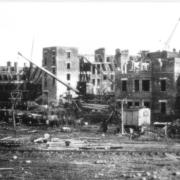
Gleneagles Hotel under construction (East and North sides) on 13th February 1923 - Dr JA Grant

During a holiday in his native Perthshire in 1910, Donald Matheson, General Manager of the Caledonian Railway Co., conceived the idea of establishing “a Georgian Hotel or country house, built in the style of a palace, to attract and cater for the British travelling class” near Crieff Junction.

C&SM Launch

On the 28th of May the museum was formally launched by Rory Stewart OBE and his wife Shoshana, with a group of former and current trustees and invited guests.

No great ceremony but today was the hand over of the keys for the town hall, to begin our lease and a new chapter for Crieff & Strathearn Museum.

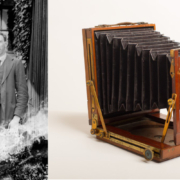
Today, David visited the Scottish Conservation Studio at Hopetoun House, for a training session in cleaning photographic plates.

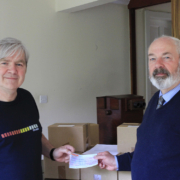
Thanks to the tremendous generosity of Janet Hughes, who donated the whole purchase amount for the John McGregor Collection, Andrew was able to go to Dumbartonshire today to collect the boxes of glass half plates from Malcolm Lindsay.

Back in January we were contacted by Malcolm Lindsay who had acquired over four hundred photographic half plates by the Muthill photographer John McGregor and wanted us to know they were available for sale.