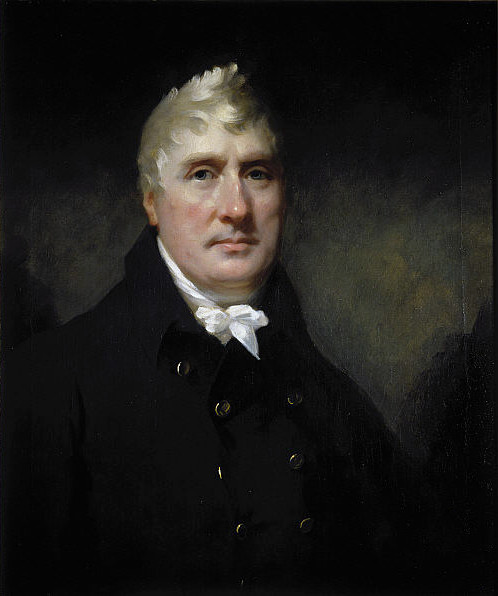
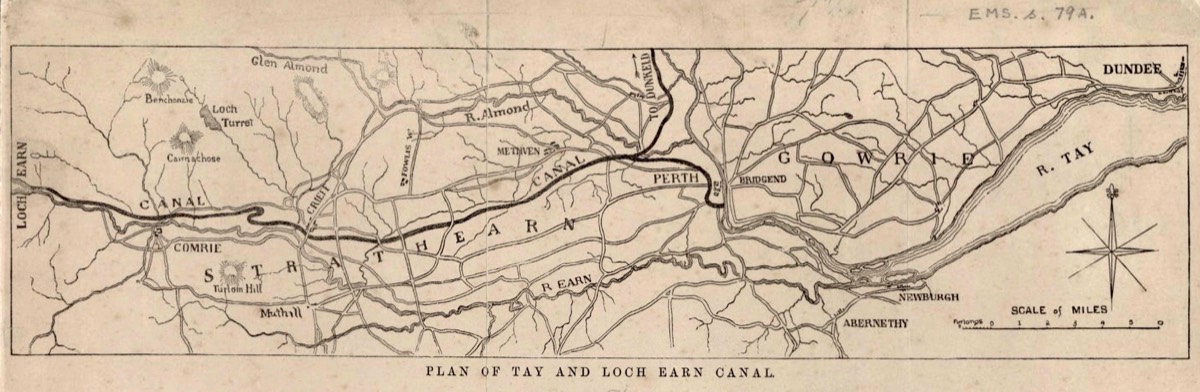
However, the idea didn’t die as in June 1793 a proposal was made by James Drummond Esq.,Comrie, when he published
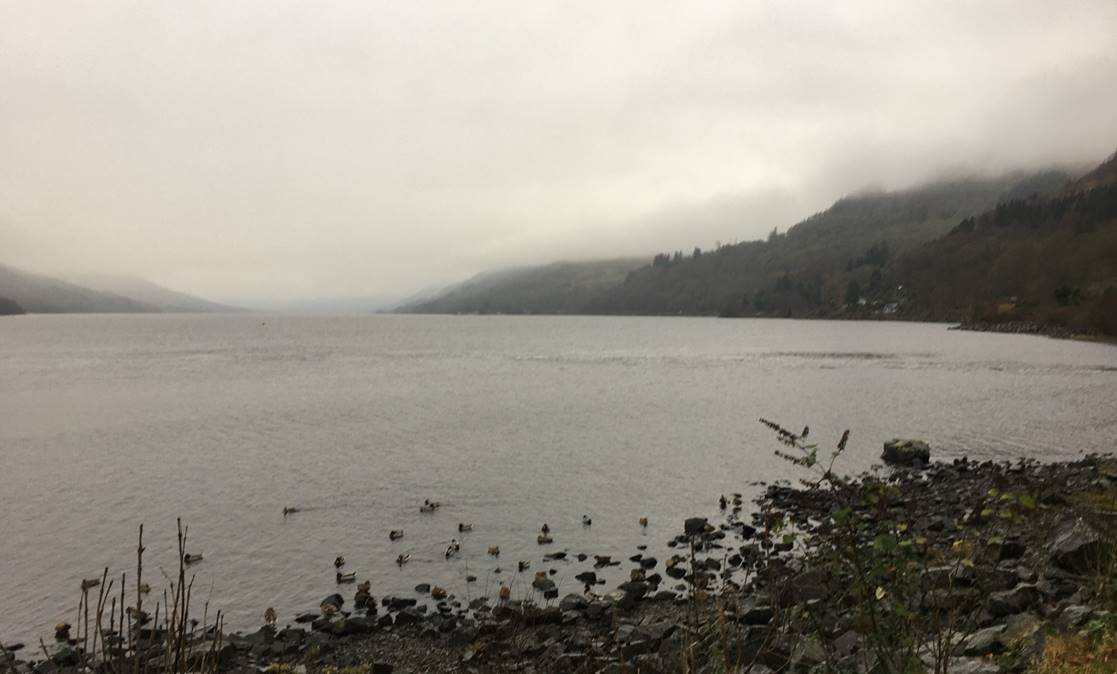
‘Remarks concerning the formation of a navigable canal, betwixt Perth and Loch Ern. It is proposed to open a communication , by water, through the inland parts of Perthshire, for a tract of 40 miles, commencing at the town of Perth and firth of Tay, and extending westward by Crieff and Comrie to Lochern. A canal of about four feet deep and eight feet broad, is supposed sufficient for this purpose, with convenient passing places upon the sides. The course of it, in general, could be directed through a level country; insomuch, that for a space of 12 or 14 miles no lock would be necessary. Still the expense of such an undertaking must be considerable, and, might amount to about 30,000librum (pounds).’
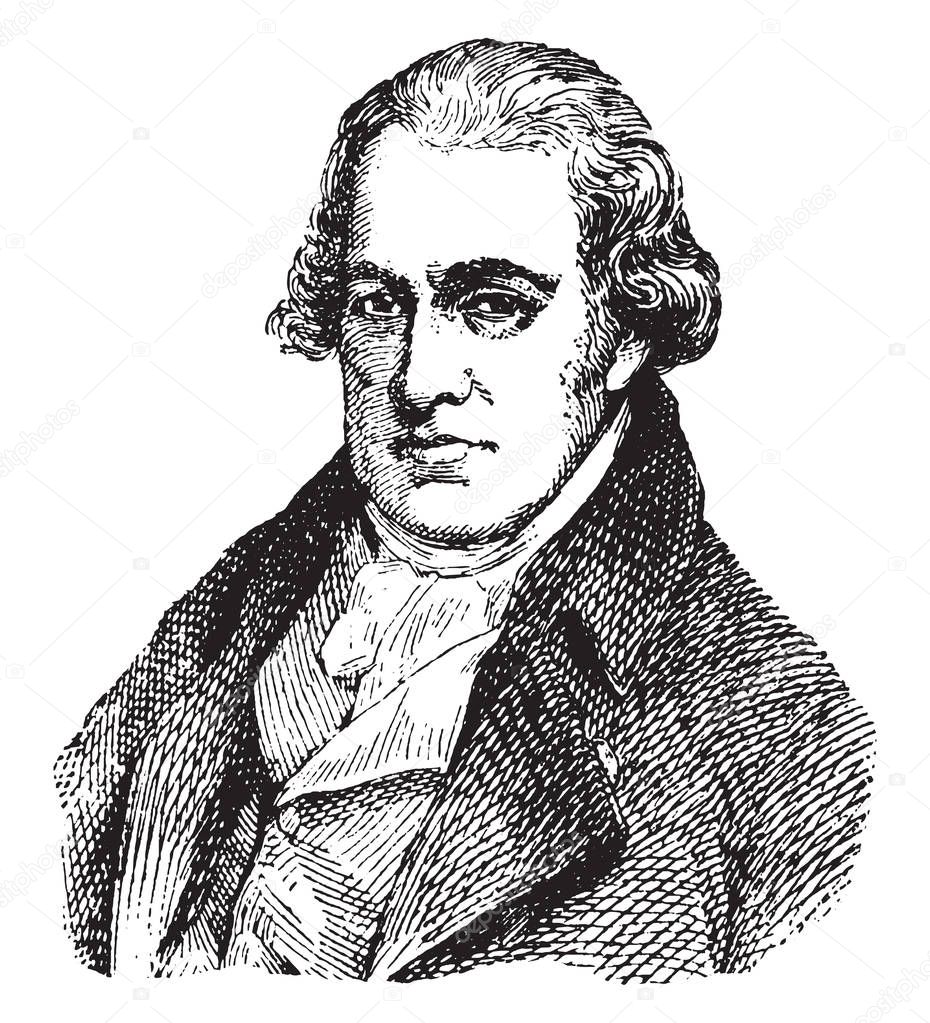
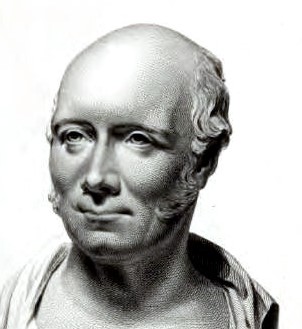
{James Watt Scottish inventor and Engineer who did an overview of the land between the River Tay and Crieff for its suitability for a canal. (Online)}
An online site suggests that could equate to around £243m in 2020. In addition to the canal there was an intention
“ that the canal should be joined at Comrie by a turnpike road, leading from Stirling , by Dumblane and Glenlichorn, and through Glenlednick, to Loch Tay side; so that, in this manner, a complete communication would be opened through a country of some hundred miles of extent , containing upwards of 100,000 people.“
(Although the canal was not built, the Glenlichorn road was constructed in around 1810.)
No doubt the huge cost deterred investors and 5 years later James seems to have suggested an abbreviated version of his plan
‘..that a canal from Perth to Crieff, a distance of less than 20 miles, almost upon a dead level, which might be accomplished at an expense of about 10,000l. (around £81m in 2020)’
Time passed and another survey for a canal was commissioned by authorities in Perth in 1807. John Rennie, renowned canal engineer, carried out a survey and produced a report, which seems to have gone to Parliament
‘A Bill for making and maintaining a navigable canal from the River Tay, near to and on the south side of the town of Perth, to Loch Earn in the County of Perth.’
The Preamble continues, ‘it would not only facilitate and render less expensive the conveyance of goods, wares, and merchandise between the towns of Dundee, Perth and Crieff and other places, and particularly the Highlands, but would also promote the improvement and cultivation of the adjacent country by conveyance of manure, and would be otherwise of much public advantage and utility; but the same cannot be effected without aid and authority of Parliament.’