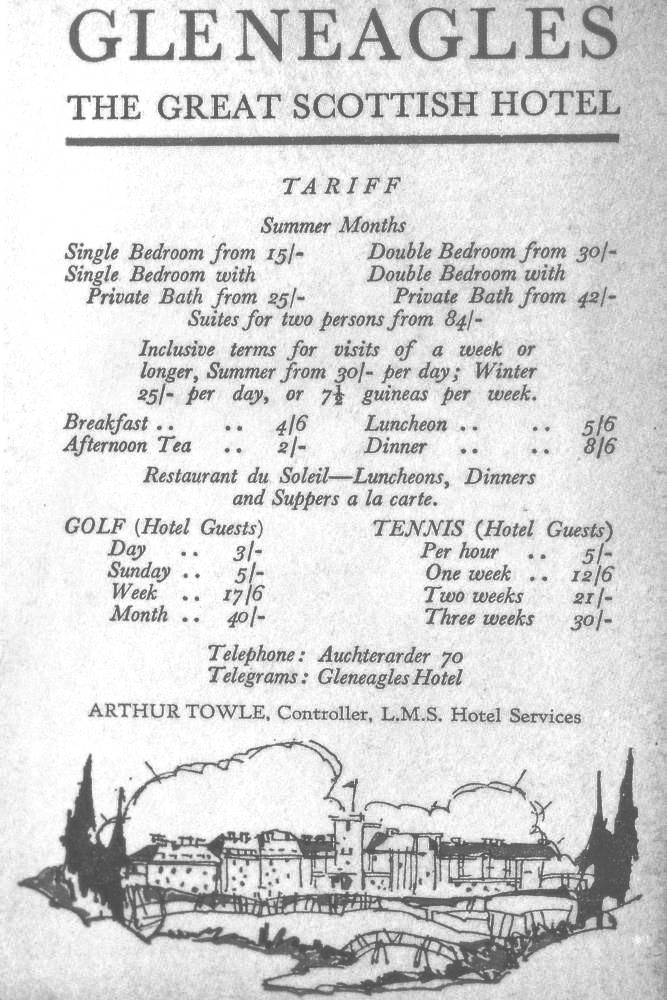
The Gleneagles Hotel’s Centenary on 5th June 2024
by David Ferguson
During a holiday in his native Perthshire in 1910, Donald Matheson, General Manager of the Caledonian Railway Co., conceived the idea of establishing “a Georgian Hotel or country house, built in the style of a palace, to attract and cater for the British travelling class” near Crieff Junction. The following year, a company was formed to build and operate this luxury hotel, which was given the appealing name of ‘The Gleneagles Hotel’, with plans to open in spring 1915. The chosen architect for the project was the renowned James Miller, also from Perthshire, known for designing Peebles Hydro and Turnberry Hotel around 1904-05. Miller had been a favourite architect of the Caledonian Railway Co., having worked for them between 1888 and 1892. However, due to wartime delays, Matthew Adam, Chief Architectural Draughtsman with the Caledonian Railway Co. since 1899, and later becoming Divisional Engineer of the LMS in 1924, took over the project post-war.

Original station at Crieff Junction around 1900, looking North with the line to Crieff on left – Kirk pc – David Ferguson Collection
Construction began in 1912, and in 1913 the Caledonian Railway was authorised to invest £25,000 in the project. Crieff Junction was renamed Gleneagles Station on 1st April 1912, and a siding from the Gleneagles-Crieff line was built in June 1914 to facilitate the delivery of materials to the work site. This siding was later used for transporting laundry and provisions to and from the Hotel, with the only known passengers being casualties on the Hotel’s Hospital Train during WWII. Crieff Junction was lavishly rebuilt in 1919 to serve as the main access point for the new Hotel. However, work on the Hotel was halted by a May 15th1915, order to withdraw labour and materials for the war effort, causing the project to be suspended until 1922.
Work on the renowned golf courses began in 1913, with design work by James Braid, a five-time Open Championship winner between 1901 and 1910, in collaboration with Major Cecil Key Hutchison. Although construction of the Hotel was suspended during the war, progress on the golf courses continued. The ‘King’s’ and ‘Queen’s’ courses, both 18 holes (with the ‘Queen’s’ course originally being 9 holes and extended to 18 in 1925), officially opened for play on May 1st 1919, although some locals had started playing them the previous year.
In 1921, sporting history was made when the first international match between the USA and the UK was held at ‘The Gleneagles Hotel’, pre-dating the Ryder Cup. A 9-hole course opened in 1928, was extended to 18 holes in 1974 and named the ‘Prince’s’, while a new 9-hole course, called the ‘Glendevon’, opened in 1980. This course was redesigned in 1993 by Jack Nicklaus, combining parts of the ‘Glendevon’ and the ‘Prince’s’ courses to create the ‘Monarch’s’ course, which was renamed the ‘PGA Centenary Course’ in 2001.
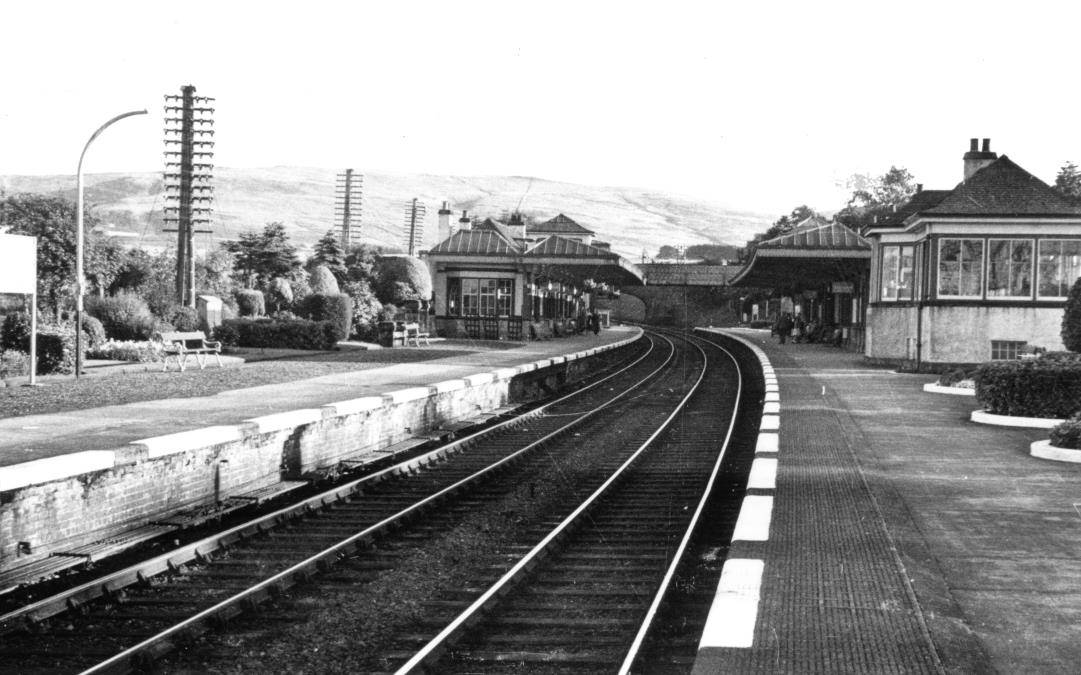
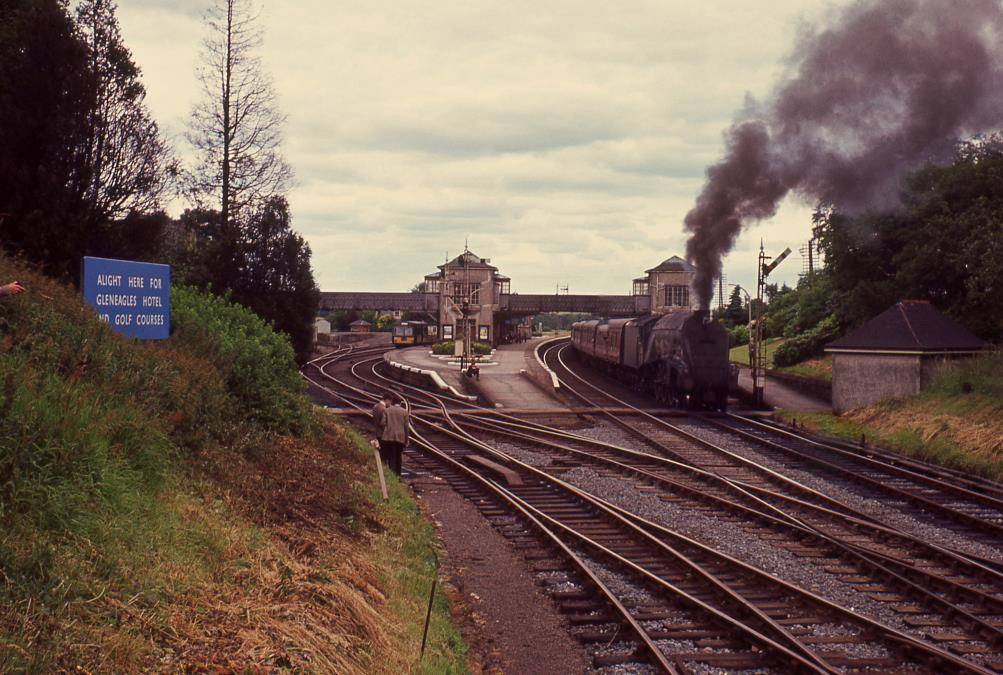
On October 1st, 1919, work began on remodelling Crieff Junction Station to become the new Gleneagles Station, though it did not fully open until March 28th 1920. The Railway Magazine of 1926 described the transformation.
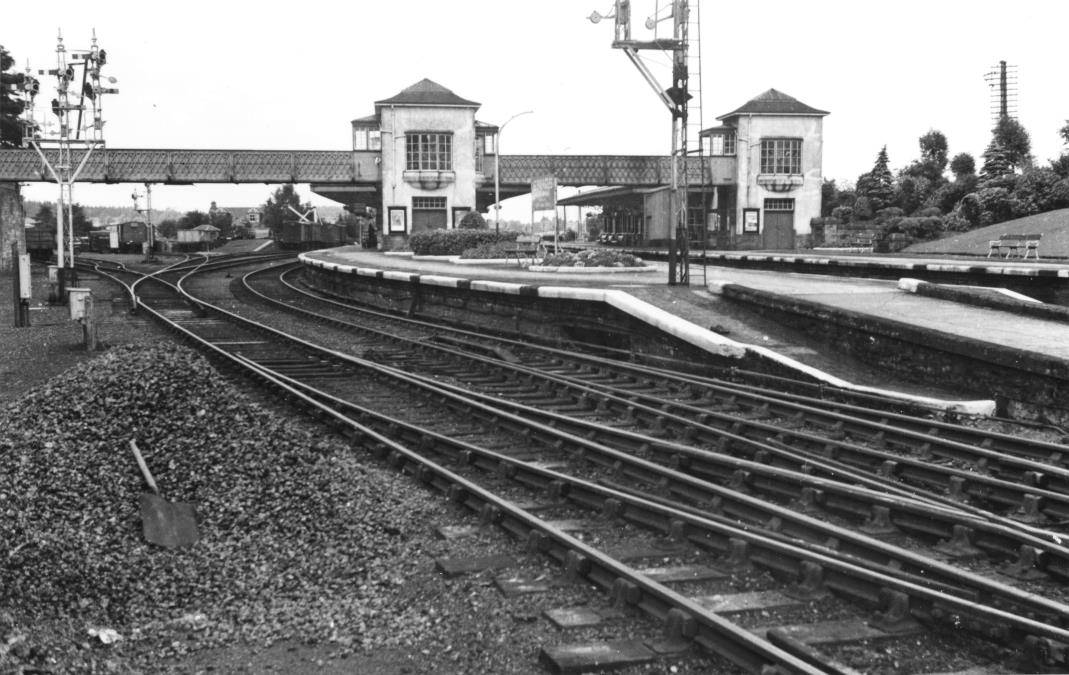
“…the original facilities, consisting of short platforms with ramshackle timber buildings, have been swept away. The sunken roadway approach, which usually became a quagmire in wet weather, has been replaced by an elegant avenue from the road to the station. This avenue consists of a road and footpath flanked by a substantial white-painted four-bar fence, immediately behind which are rows of trees with suitable shrubs interspersed. The station entrance hall, into which the avenue leads, is built in the Scottish baronial style, featuring crow-stepped gables and miniature turrets. On one side, there is a commodious booking office and a parcels office, and facing the entrance is the overbridge leading to the platforms. A train information board is provided on the overbridge to inform passengers of the time and departure platform of their trains. The continuation of the overbridge to the up line side is covered in, and opposite the top of each stairway are alcoves containing flowering plants and shrubs. The buildings on both platforms are solidly built and handsome in appearance. Those on the island platform include the station-master’s room, waiting room, and porters’ room. In the passage dividing the buildings, there are a fruit stall and bookstalls. The rooms on the up side consist of the ticket collectors’ and waiting rooms. The signal box is situated at the north end of the island platform. Additionally, the platforms and the adjoining bank on the up line side are tastefully laid out with walks and plots, reflecting the station’s award of a first-class premium in the best-kept station competition.”
In 1922, work on the Hotel resumed with updated plans to expand the building from three to four storeys. Local newspapers reported on October 14th that “a broad tarmacadam road from Gleneagles Station to the Hotel is being built by 120 men; an effort is also being made by 200 men to have the front portion of the Hotel open for the beginning of next season.”
In 1922, work on the Hotel resumed with updated plans to expand the building from three to four storeys. Local newspapers reported on October 14th that “a broad tarmacadam road from Gleneagles Station to the Hotel is being built by 120 men; an effort is also being made by 200 men to have the front portion of the Hotel open for the beginning of next season.”
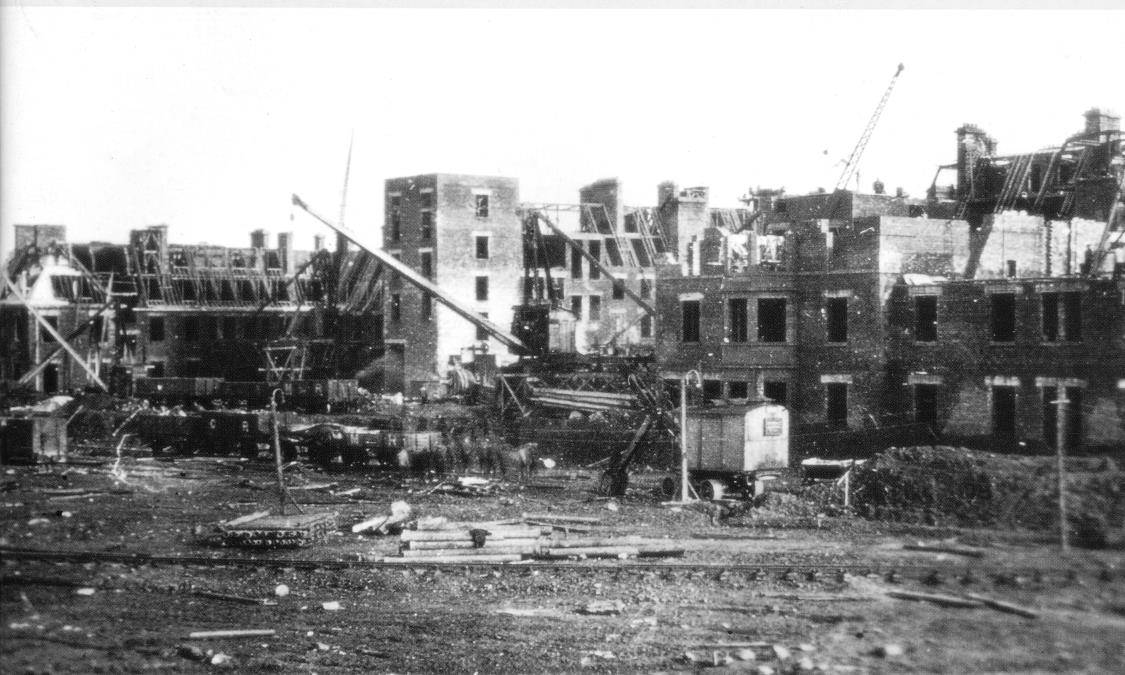
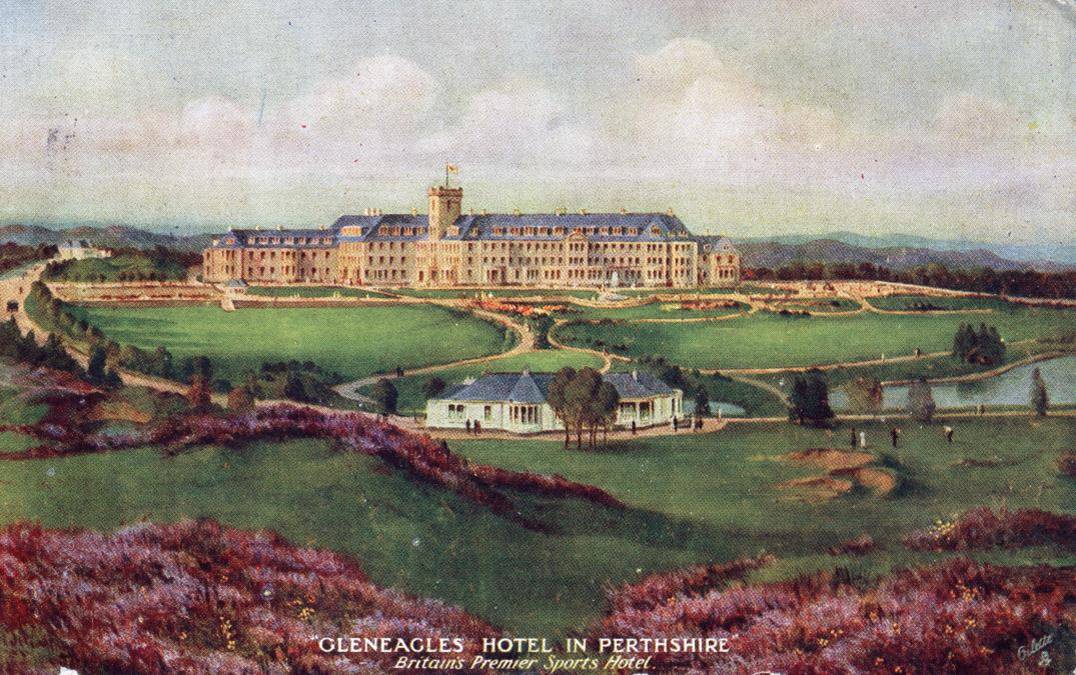
By March 17th 1923, reports indicated that 700-800 men were now employed on the Hotel and golf course, intensifying efforts to complete the project.
Around January 12th 1924, Mr. H.H. Ward, the manager of the LMS (Highland) Railway Hotel in Inverness, was reportedly appointed as the Resident Manager of The Gleneagles Hotel, as mentioned in the Strathearn Herald. However, there are conflicting reports, with other sources indicating that Mr. R.W. Turier, previously the manager of the Adelphi Hotel in Liverpool, had been appointed as the Manager.
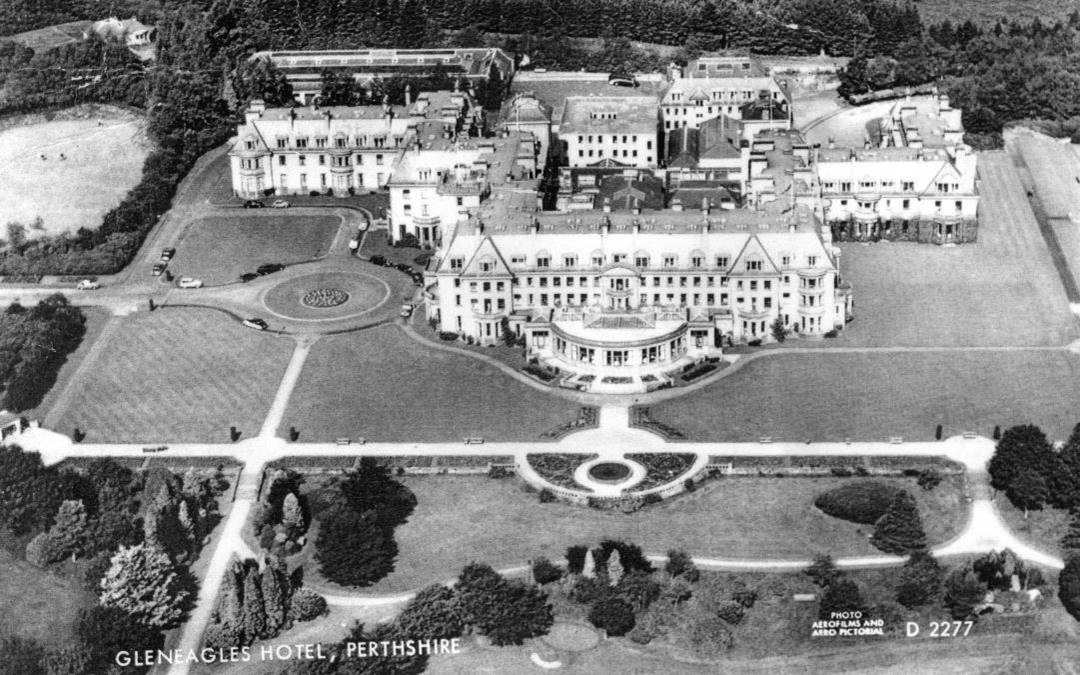
While most of the furniture was British or Scottish, other items were sourced from Italy, Belgium, France, Madeira, and Canada. Notably, the Hotel’s carpets, if laid end to end, would stretch almost from Crieff to Methven—a distance of 12 miles—in varying hues. Electricity for the Hotel was sourced from a plant at Bridge of Allan, located 16 miles away.
To attract visitors and golfers to the luxurious palace, The Gleneagles Hotel utilised a slogan of ‘Heich abune the heich’ (High above the high). Special through carriages were added to many express trains arriving at Gleneagles Station, including those from St. Pancras via the Midland route, as well as from Euston and other major centres. Additionally, connections were enhanced with cities such as Glasgow, Edinburgh, Perth, Aberdeen, and Inverness, facilitating easier access for guests traveling to the Hotel.
Over the years, The Gleneagles Hotel has hosted a plethora of celebrity guests, including Bing Crosby, Bob Hope, Lloyd George, Val Doonican, Sean Connery, Jackie Stewart, and Telly Savalas.
The Hotel has been a huge boon to Strathearn and helped raise the profile of the area as a place to come and stay or visit, adding economically to the area, as well as being a provider of employment.
From 1926 to 1982, The Gleneagles Hotel operated seasonally, opening between Easter and late October as a cost-saving measure. However, in 1981, the Hotel underwent significant changes when it was sold by the conservative government, transitioning from being part of the British Transport Hotel group into private ownership. Subsequently, it began operating year-round, catering to guests throughout all seasons.
During the outbreak of war in 1939, The Gleneagles Hotel was repurposed as a military hospital, with staffing provided by members of the Royal Army Medical Corps (RAMC) Voluntary Aid Detachment (VAD), along with domestic staff and a Military Police detachment. Overseeing the whole operation, was Dr. Thomas Ferguson who served as the Medical Superintendent, with other staff such as Elizabeth Noble, a Registered General Nurse (RGN) and State Certified Nurse (SCN), who was appointed Senior Ward Sister in March 1940. She was in charge of a 63-bed surgical ward, supported by two junior sisters. The ground, first, and second floors of the Hotel were utilised to accommodate patients.
Elizabeth said, “In 1940 after the fall of Narvik we received a convoy of patients (of various nationalities) brought by the railway to the back door of the hospital, taking in 100 patients in just over 20 minutes.” Many of these patients had been torpedoed multiple times and suffered from varying degrees of wounds, frostbite, and exposure. The railway access to the hospital proved crucial in reducing transportation time and ensuring timely medical care. She continued, “The Gleneagles (Hotel Hospital) had their own hospital train. It was fully equipped with instruments, dressings etc and kept immaculate and ready for emergencies at all times. It was known as the Hospital Evacuation Train 101.”
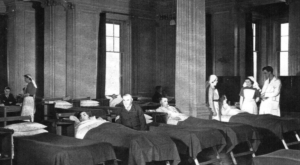
By the end of 1941, the demand for auxiliary hospitals like The Gleneagles Hotel Hospital had decreased. In 1942, the Hotel assumed a new role as a rehabilitation centre for miners to “restore to fitness, in the quickest possible time, miners who have been incapacitated through injury or illness”. The centre was opened by Thomas Johnston, Secretary of State for Scotland.
Treatment at the rehabilitation centre was provided free of charge, and the Miner’s Welfare Commission covered the miners’ travel expenses. The last patients departed in February 1947, marking the end of the centre’s operations. Subsequently, the Hotel returned to the control of the LMS.
After the war, the government undertook a comprehensive review of the country’s economy. With cost-saving measures in mind, it was decided to nationalise the railways. Consequently, on January 1st 1948, the LMS ceased to exist, and British Railways was established. From July 1st 1948, The Gleneagles Hotel came under the management of the British Transport Commission’s Hotels Executive, remaining under state ownership.
In 1981, the Hotel underwent a significant change when it was sold off. The Gleneagles Hotel, along with the Caledonian and North British Hotels, was acquired for £10 million plus shares, the British Railways Board retaining a one-third share. Subsequently, the Hotel changed hands several times. It was acquired by Arthur Bell & Sons in 1984, under the management of Denis Aldridge, which later came under the ownership of Guinness in 1985 and Diageo in 1997, at which point the manager was Peter Lederer.
Most recently, in 2015, the ownership of the Hotel changed once again when it was acquired by Ennismore, a lifestyle hospitality company.
Also in 2015, the Strathallan Community Rail Partnership was established, and have been working hard to improve rail and bus services and connections at Gleneagles Station. Members of the public can contact them via their website or Facebook page.
Now celebrating its centenary, The Gleneagles Hotel continues to be a symbol of luxury and history.
Happy 100th birthday The Gleneagles Hotel!”